
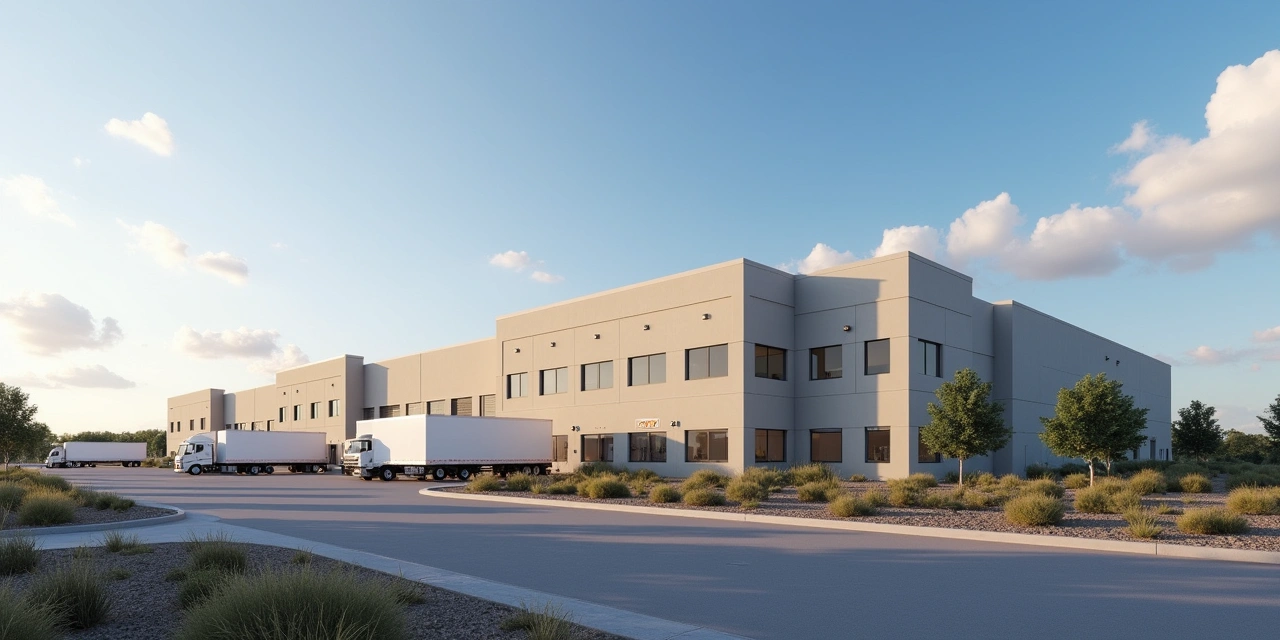

Introduction: The Borderplex Logistics Boom
When Maria Rodriguez expanded her third-party logistics operation from a 15,000 sq ft facility in Fabens to a 45,000 sq ft distribution center near Horizon City, she faced a challenge familiar to warehouse operators across El Paso County: How do you fund rapid growth when your capital is tied up in inventory, equipment, and accounts receivable? According to the El Paso Regional Economic Development Corporation, the Borderplex logistics sector grew by 23% between 2023-2025, creating unprecedented demand for warehouse funding and supply chain capital.
The corridor stretching from Fabens through El Paso to Vinton represents one of North America's most critical distribution hubs, where $82 billion in cross-border trade flows annually according to U.S. Census Bureau data. Yet despite this economic vitality, many warehouse operators struggle to access the capital needed to scale operations, purchase material handling equipment, or bridge the gap between paying suppliers and receiving customer payments. Whether you're managing cold storage in Socorro, operating a transload facility in Santa Teresa, or running a fulfillment center in East El Paso, understanding your financing options can mean the difference between capturing growth opportunities and losing them to better-capitalized competitors.
In this comprehensive guide, we'll walk you through the step-by-step process of securing warehouse funding in El Paso County, compare different working capital solutions for logistics operations, and show you how distribution financing works in the unique cross-border environment of the Borderplex. You'll learn which funding types match specific warehouse needs, what lenders look for in supply chain businesses, and how to maximize your approval chances even with seasonal revenue fluctuations or credit challenges.
Key Fact: The Port of El Paso processes over 5 million commercial trucks annually, making it the second-busiest commercial port of entry in the United States. This volume creates consistent demand for warehouse funding to support inventory, equipment, and operational cash flow needs.

Understanding Warehouse Funding Types
Not all supply chain capital works the same way, and choosing the wrong financing type can saddle your warehouse operation with payments that don't match your cash flow cycles. According to the National Industrial Transportation League, 67% of logistics companies use multiple financing sources simultaneously to manage different operational needs. Let's break down the primary options available to El Paso County warehouse operators:
Traditional Working Capital Loans
Working capital loans provide lump-sum financing repaid over 6-36 months with fixed or variable interest rates. These work best for established warehouses with 680+ credit scores and two years of operating history. In El Paso, typical loan amounts range from $50,000 to $500,000 with APRs of 8-15% depending on creditworthiness and collateral. The advantage is predictable payments, but the disadvantage is inflexibility during seasonal slowdowns when your volumes drop.
Revenue-Based Financing
For warehouses with fluctuating monthly volumes, revenue-based financing offers a flexible alternative. Instead of fixed monthly payments, you repay a percentage of daily or weekly credit card and ACH receipts until reaching a predetermined total (typically 1.2-1.4x the borrowed amount). This structure means payments automatically adjust with your business cycles—higher during peak shipping seasons, lower during slower months. El Paso warehouses processing $100,000+ monthly can typically access $25,000-$250,000 through this channel.
Invoice Factoring for Logistics
If your warehouse has strong commercial clients but faces 30-90 day payment terms, invoice factoring converts those receivables into immediate cash. According to the International Factoring Association, factoring volumes in the logistics sector grew 34% from 2023-2025 as more companies needed to bridge the payment gap. You sell invoices at a 2-5% discount and receive 80-90% upfront, with the remainder (minus fees) paid when your customer settles. This is particularly valuable for cross-border operations where payment cycles can extend to 60-90 days.
El Paso Warehouse Funding Comparison
| Financing Type | Typical Amount | Speed to Fund | Credit Requirement | Best For |
|---|---|---|---|---|
| Working Capital Loan | $50K-$500K | 5-14 days | 680+ | Equipment purchases, expansions |
| Revenue-Based Financing | $25K-$250K | 3-7 days | 600+ | Seasonal operations, flexible repayment |
| Invoice Factoring | $10K-$5M | 1-3 days | 550+ | B2B operations with net terms |
| Equipment Financing | $25K-$1M | 7-21 days | 650+ | Forklifts, racking, automation |
| SBA 7(a) Loan | $100K-$5M | 45-90 days | 680+ | Real estate, major expansions |
Source: Franklin Funding analysis of 2025 El Paso County logistics lending data
Equipment Financing for Material Handling
Equipment financing allows you to acquire forklifts, pallet racking, conveyor systems, and warehouse management software through loans or leases where the equipment itself serves as collateral. This preserves your working capital for inventory and operations while spreading costs over the asset's useful life (typically 3-7 years). El Paso warehouses can finance 80-100% of equipment costs with rates starting around 6-10% APR for strong credit profiles.
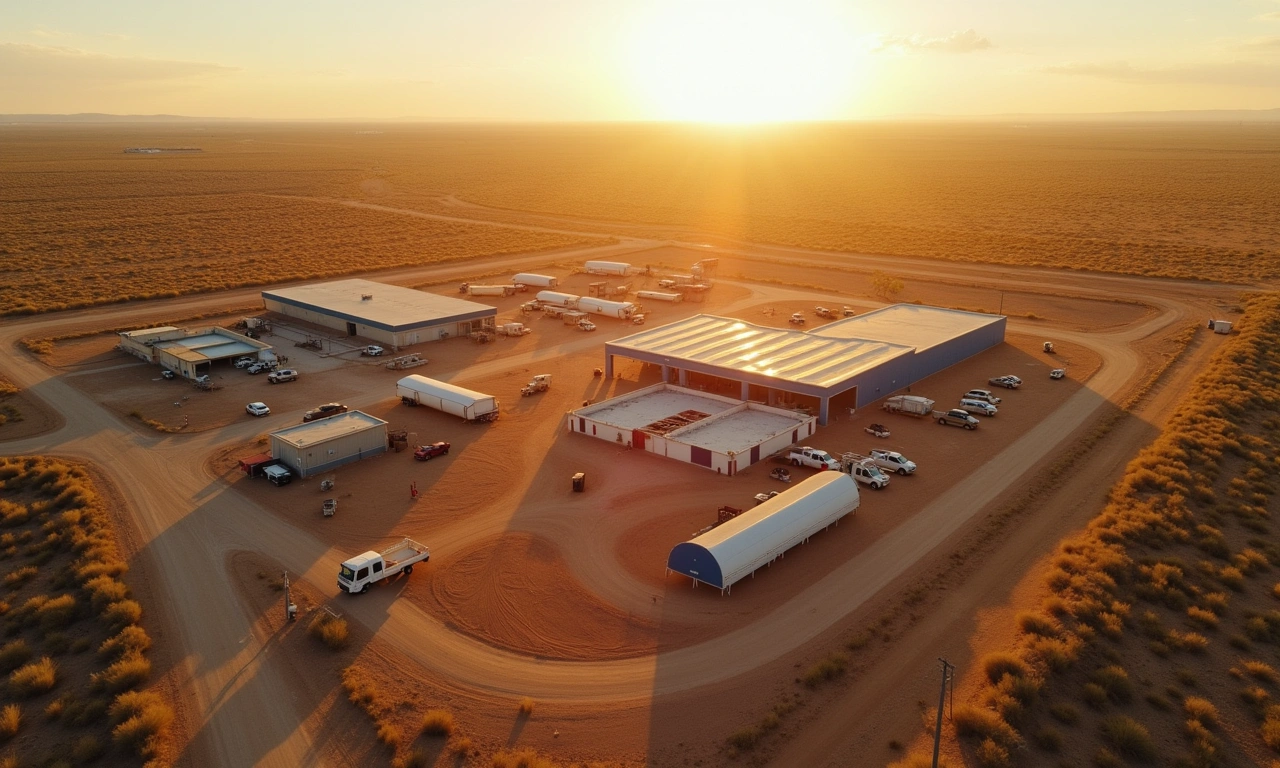
Step-by-Step: Securing Supply Chain Capital in El Paso
Based on our experience connecting hundreds of Borderplex logistics operations with appropriate lenders, here's the proven process for securing warehouse funding in El Paso County:
Step 1: Assess Your Specific Capital Needs (Time: 2-4 hours)
Before approaching any lender, clearly identify what you need funding for and how much. Are you covering inventory purchases for peak season? Upgrading to automated picking systems? Expanding into a larger facility? The Texas Warehouse Association recommends creating a detailed capital needs analysis that breaks down:
- Immediate needs (next 30 days): payroll, utilities, inventory orders
- Short-term needs (1-6 months): equipment repairs, seasonal inventory buildup
- Medium-term needs (6-18 months): facility expansion, technology upgrades
- Long-term needs (18+ months): real estate acquisition, major automation
This assessment determines which funding type matches your timeline and prevents the costly mistake of using short-term, higher-cost capital for long-term investments.
Step 2: Gather Required Documentation (Time: 3-5 days)
While documentation requirements vary by lender and funding type, most warehouse financing applications require:
- Financial statements: Last 3-6 months of bank statements, profit & loss statements, balance sheets
- Tax returns: Business returns for previous 2 years (sometimes personal returns for owners)
- Accounts receivable aging: Report showing outstanding invoices and payment histories
- Customer concentration: List of top 10 clients and percentage of revenue from each
- Facility documentation: Lease agreement or property deed, insurance certificates
- Trade references: Supplier payment history, customs broker relationships (for cross-border ops)
- Business licenses: Texas Department of Licensing registration, EIN, any required permits
For cross-border warehouses handling USMCA shipments, additional documentation may include customs broker certifications, CTPAT validation, and client contracts demonstrating consistent trade volumes.
Step 3: Calculate Your Borrowing Capacity (Time: 1 hour)
Understanding how much you can realistically borrow prevents wasted time on applications that won't work. Here's how different funding types calculate capacity in the warehouse sector:
- Working capital loans: Typically 10-15% of annual revenue, adjusted for profitability and existing debt
- Revenue-based financing: Usually 1-3 months of average monthly revenue for businesses processing $100K+/month
- Invoice factoring: 80-90% of eligible accounts receivable (usually invoices under 90 days from creditworthy clients)
- Equipment financing: 80-100% of equipment purchase price or fair market value for used equipment
For example, a warehouse doing $2.4 million annually ($200K/month average) with $300K in eligible receivables could potentially access: $240K-$360K in working capital, $200K-$600K in revenue-based financing, or $240K-$270K through factoring, depending on qualifications.
Did You Know? El Paso County's strategic location at the intersection of I-10, I-25, and Highway 54 makes it the gateway for 40% of all U.S.-Mexico trade by truck. This positioning gives local warehouses strong borrowing leverage due to consistent trade volumes and diversified customer bases.
Step 4: Match Funding Type to Cash Flow Cycles (Time: 30 minutes)
The biggest mistake we see warehouse operators make is choosing financing that doesn't match their revenue patterns. Here's how to align funding with El Paso's seasonal logistics cycles:
- Peak season preparation (September-December): Use working capital loans or revenue-based financing to build inventory 60-90 days before holiday shipping surge
- Post-holiday slowdown (January-March): Rely on invoice factoring to maintain cash flow when volumes drop but receivables remain steady
- Summer heat slowdown (June-August): Revenue-based financing provides flexibility as retail shipments decline and payment percentages naturally decrease
- Cross-border volatility: Maintain multiple funding sources to handle Port of Entry delays, customs holds, or sudden client order surges
Step 5: Submit Applications to Multiple Lenders (Time: 1-3 days)
Never apply to just one lender—you need competitive offers to secure the best terms. Focus on 3-5 lenders who specialize in logistics financing and understand the Borderplex market dynamics. We recommend:
- One traditional bank with Texas operations (for best rates if you qualify)
- Two alternative lenders specializing in warehouse funding (faster approval, more flexible)
- One factoring company (if you have B2B receivables)
- One regional lender familiar with cross-border operations (understands USMCA trade nuances)
Submit all applications within a 14-day window to minimize credit score impact from multiple inquiries. According to FICO, multiple inquiries for the same type of financing within 14 days count as a single inquiry for scoring purposes.
Step 6: Review and Negotiate Terms (Time: 2-5 days)
When offers arrive, compare more than just interest rates. The Commercial Finance Association recommends evaluating:
- Total cost of capital: APR, origination fees, monthly fees, prepayment penalties
- Repayment structure: Fixed vs. flexible, daily vs. monthly, percentage-based vs. fixed amount
- Advance rate: For factoring, what percentage of invoice value you receive upfront
- Covenants and restrictions: Customer concentration limits, minimum balance requirements, geographic restrictions
- Funding speed: Time from approval to cash in your account
Don't hesitate to negotiate—many lenders have flexibility on fees and rates, especially if you have multiple offers. Showing a competing term sheet often yields 1-2% rate reductions or fee waivers.
Step 7: Close and Deploy Capital Strategically (Time: 1-7 days)
Once you accept an offer, most warehouse funding closes within 1-7 days depending on complexity. Use the capital strategically based on your original needs assessment:
- Inventory purchases: Negotiate bulk discounts with suppliers now that you have immediate payment capability
- Equipment upgrades: Prioritize high-ROI investments like warehouse management systems that improve efficiency
- Facility improvements: Focus on expansions that reduce per-unit handling costs or enable higher-value services
- Reserve buffer: Keep 10-15% of borrowed capital as a cash buffer for unexpected opportunities or challenges
Expert Insights: What Lenders Look for in Warehouse Operations
We spoke with commercial lending specialists who evaluate hundreds of logistics applications annually to understand what separates approved warehouse funding requests from declined ones. Here's what they told us:
"The strongest warehouse lending applications demonstrate customer diversification and consistent cash flow across seasons. We want to see that no single client represents more than 25% of revenue and that monthly deposit patterns remain stable even during El Paso's slower summer months. Cross-border operations need to show they have both U.S. and Mexican clients to mitigate trade policy risks."
"Technology adoption is increasingly important in warehouse lending decisions. Operations with modern WMS systems, real-time inventory tracking, and automated billing processes have 30% higher approval rates because they demonstrate operational efficiency and growth potential. We're more confident lending to warehouses that can scale without proportionally increasing labor costs."
Industry-Specific Funding Strategies for El Paso Warehouses
Different types of warehouse operations in El Paso County face unique financing challenges and opportunities. Here's how to approach supply chain capital based on your specific niche:
Cold Storage and Food Distribution
Temperature-controlled warehouses require substantial upfront investment in refrigeration systems and have higher ongoing utility costs. According to the Global Cold Chain Alliance, cold storage operations average 40-50% higher operating expenses than ambient warehouses. For El Paso cold storage operators, consider:
- Equipment financing specifically for refrigeration units and backup generators (essential given Texas grid challenges)
- Working capital with 60-90 day terms to cover higher utility costs during summer months when desert heat strains cooling systems
- Invoice factoring for produce distributors who face 45-60 day payment terms from grocery retailers
E-Commerce Fulfillment Centers
The explosion of online shopping has created high demand for fulfillment operations in El Paso, where warehouses serve both U.S. Southwest and Northern Mexico markets. These operations typically need:
- Fast-access revenue-based financing to handle sudden scaling needs when landing new e-commerce clients
- Equipment financing for picking automation, packaging systems, and shipping integration technology
- Seasonal lines of credit timed to Q4 holiday surge when volumes can triple
Cross-Border Transload Facilities
Warehouses in Fabens, Santa Teresa, and near the Ysleta Port of Entry that handle cargo transfers between Mexican and U.S. carriers face unique challenges including customs delays and currency fluctuations. We recommend:
- Invoice factoring to maintain cash flow during the 10-15 day customs clearance period
- Multiple funding sources to hedge against trade policy changes or port slowdowns
- Equipment financing for cargo handling gear that meets both U.S. DOT and Mexican SCT standards
For more on cross-border logistics funding, see our guide to Santa Teresa NM logistics lending.
Third-Party Logistics (3PL) Providers
3PLs managing inventory for multiple clients need flexible capital that scales with client count. The Council of Supply Chain Management Professionals reports that 3PL revenues grew 28% from 2023-2025, creating unprecedented funding demand. For El Paso 3PLs, focus on:
- Revenue-based financing that adjusts as you add or lose clients
- Working capital for client onboarding costs (software integration, staff training, initial inventory purchases)
- Invoice factoring against diverse receivables base to maintain steady cash flow
Navigating Credit Challenges in Warehouse Funding
Not every El Paso warehouse operator has perfect credit, and that's okay—alternative financing options exist specifically for credit-challenged businesses. According to Experian Commercial, 43% of small warehouse operations have credit scores below 650 due to rapid growth, equipment debt, or economic challenges from trade disruptions.
Options for Warehouses with Credit Scores Below 650
If traditional lending has declined your applications, consider these alternatives available through bad credit business loans:
- Invoice factoring (550+ credit): Approval based on your customers' creditworthiness, not yours
- Revenue-based financing (600+ credit): Emphasizes cash flow over credit history
- Secured equipment financing (600+ credit): Equipment serves as collateral, reducing lender risk
- Merchant cash advances (no minimum): Fastest approval but highest cost—use only for urgent needs
For warehouses rebuilding credit, we recommend starting with invoice factoring to establish payment history, then transitioning to lower-cost options as creditworthiness improves. See our full guide on bad credit solutions in El Paso.
Geographic Considerations: Fabens to Vinton Corridor
Location significantly impacts warehouse funding opportunities in El Paso County. Here's what lenders consider for different areas:
East El Paso County (Fabens, Tornillo)
Warehouses in these agricultural areas benefit from proximity to farm operations and lower facility costs, but face seasonal revenue fluctuations tied to harvest cycles. Lenders familiar with agricultural logistics understand these patterns and structure financing accordingly. The area's growing population (Fabens grew 12% from 2020-2025) also attracts lenders seeking growth markets.
Central El Paso (Airport, Montana Vista)
Proximity to El Paso International Airport and I-10 makes these locations prime for time-sensitive distribution. Higher facility costs are offset by premium pricing capabilities, making traditional bank financing more accessible for established operations. The El Paso Airport Authority reports cargo volumes increased 34% from 2022-2025, strengthening lending confidence in this corridor.
Horizon City and Socorro
These rapidly growing suburbs offer newer industrial parks with modern facilities. According to El Paso County economic development data, Horizon City added 2.3 million square feet of warehouse space between 2023-2025. This growth attracts competitive lending from both traditional banks and alternative financiers. Our guides to Horizon City funding and Socorro business loans provide location-specific insights.
West El Paso (Vinton, Westway)
Warehouses near the Santa Teresa Port of Entry benefit from direct access to New Mexico's Foreign Trade Zone and newer border infrastructure. Cross-border operations here often qualify for specialized trade finance programs and can leverage proximity to manufacturing maquiladoras for consistent volumes.
Maximizing Your Warehouse Funding ROI
Securing capital is only half the equation—deploying it effectively determines your actual return on investment. Based on Warehousing Education and Research Council studies, these investments deliver the highest ROI for El Paso facilities:
High-ROI Capital Deployments
- Warehouse Management Systems (18-24 month payback): Automation reduces labor costs by 15-25% and error rates by 35-50%
- Vertical storage expansion (12-18 month payback): Adding racking height increases capacity 40-60% without expanding footprint
- Energy efficiency upgrades (24-36 month payback): LED lighting and insulation improvements cut El Paso's high summer cooling costs by 20-30%
- Diversification inventory (6-12 month payback): Adding complementary product lines reduces customer concentration risk and increases revenue per square foot
Avoiding Low-ROI Capital Traps
Conversely, these common uses of borrowed capital often disappoint:
- Covering recurring operating losses without addressing root profitability issues
- Overleveraging on real estate purchases that reduce operational flexibility
- Buying cutting-edge automation that exceeds your actual throughput needs
- Expanding before establishing consistent demand from existing capacity
Frequently Asked Questions
What types of warehouse funding are available in El Paso County?
El Paso warehouses can access working capital loans, equipment financing, invoice factoring, revenue-based financing, and specialized distribution financing. Each option serves different needs from inventory purchases to facility expansions along the Borderplex corridor.
How quickly can warehouse operators secure supply chain capital?
Many warehouse funding options provide decisions within 24-48 hours and funding within 3-7 business days. Invoice factoring and revenue-based financing often offer the fastest access, while equipment loans may take 1-2 weeks for larger amounts.
What credit score is needed for logistics warehouse loans?
Traditional warehouse loans typically require 680+ credit scores, but alternative financing options like invoice factoring accept scores as low as 550. Revenue-based financing focuses more on cash flow than credit history, making it accessible to newer operations.
Can cross-border distribution centers qualify for funding?
Yes, cross-border warehouses in areas like Santa Teresa and Fabens can qualify for specialized supply chain capital. Lenders consider USMCA trade volumes, customs broker relationships, and both U.S. and Mexican client diversification when evaluating applications.
What documents do warehouse operators need for financing applications?
Most lenders require 3-6 months of bank statements, business tax returns, profit and loss statements, accounts receivable aging reports, and lease agreements. Cross-border operations may also need customs documentation and client contracts demonstrating trade volumes.
How does seasonal demand affect warehouse funding eligibility?
Seasonal fluctuations are common in El Paso logistics due to retail cycles and agricultural shipments. Lenders evaluate year-round performance and may offer seasonal lines of credit or revenue-based financing that adjusts with monthly volumes rather than fixed payments.
What are the typical interest rates for distribution financing in Texas?
Distribution financing rates range from 8-12% APR for traditional loans with strong credit to 15-35% for alternative options like merchant cash advances. Invoice factoring typically charges 1-5% per transaction, while revenue-based financing costs 1.1-1.4x the borrowed amount over 6-18 months.
Conclusion: Your Borderplex Warehouse Funding Roadmap
The warehouse and distribution sector in El Paso County stands at an inflection point. With $82 billion in annual cross-border trade, proximity to major Southwest markets, and infrastructure investments transforming the Borderplex, logistics operations from Fabens to Vinton have unprecedented growth opportunities. But capturing those opportunities requires strategic access to warehouse funding that matches your operational realities—seasonal fluctuations, customer payment terms, equipment needs, and expansion timelines.
Whether you're a cold storage operator in Socorro managing high utility costs, a 3PL provider in Horizon City onboarding new e-commerce clients, or a cross-border transload facility in Fabens navigating customs delays, the right supply chain capital exists for your situation. The key is understanding which funding types align with your cash flow patterns, knowing what lenders look for in logistics operations, and approaching the application process strategically rather than desperately.
We've seen hundreds of El Paso County warehouse operators transform their businesses with appropriate financing—expanding into larger facilities, upgrading to automated systems, diversifying their client base, and building the cash reserves needed to weather trade disruptions or seasonal slowdowns. The difference between those who succeed and those who struggle often comes down to simply knowing their options and taking action before cash flow challenges become crises.
Ready to Secure Warehouse Funding for Your El Paso Operation?
Franklin Funding connects Borderplex logistics businesses with lenders who understand cross-border trade, seasonal fluctuations, and the unique challenges of warehouse operations from Fabens to Vinton. Our network includes specialists in invoice factoring, equipment financing, and flexible working capital solutions designed for supply chain businesses.
Get started with a free funding consultation—we'll analyze your specific situation, explain your options, and connect you with lenders who compete for your business. No obligation, no upfront fees, just straightforward guidance from a team that understands El Paso logistics.
Get Your Free Funding Analysis